Design-Informed Generative Modelling of Skeletal Structures using Structural Optimization
This research developed an automated computational workflow for generating structurally robust, ready-to-manufacture CAD models of skeletal structures from topology-optimized continuum designs. The key challenge addressed is the gap between mathematically optimal topologies and practically constructible structures: topology optimization produces smooth, complex geometries that are difficult to manufacture using standard industry shapes.
The developed workflow unifies topology, layout, and size optimization within a single parametric platform. Starting from a 2D topology-optimized binary image, a modified Zhang–Suen skeletonization algorithm extracts a one-pixel-wide medial axis, which is then converted into a spatial frame model using graph theory. The frame members undergo iterative size and layout optimization, and a final CAD model is generated by recursively combining constructive solid geometry primitives. All outputs are checked against standard codes of practice — Eurocode 3 for steel structures — ensuring structural integrity under axial, bending, shear, and buckling failure modes.
The workflow is fully implemented in Rhinoceros 3D with Grasshopper and a Python coding environment, making it accessible to practicing engineers without requiring bespoke manufacturing techniques.
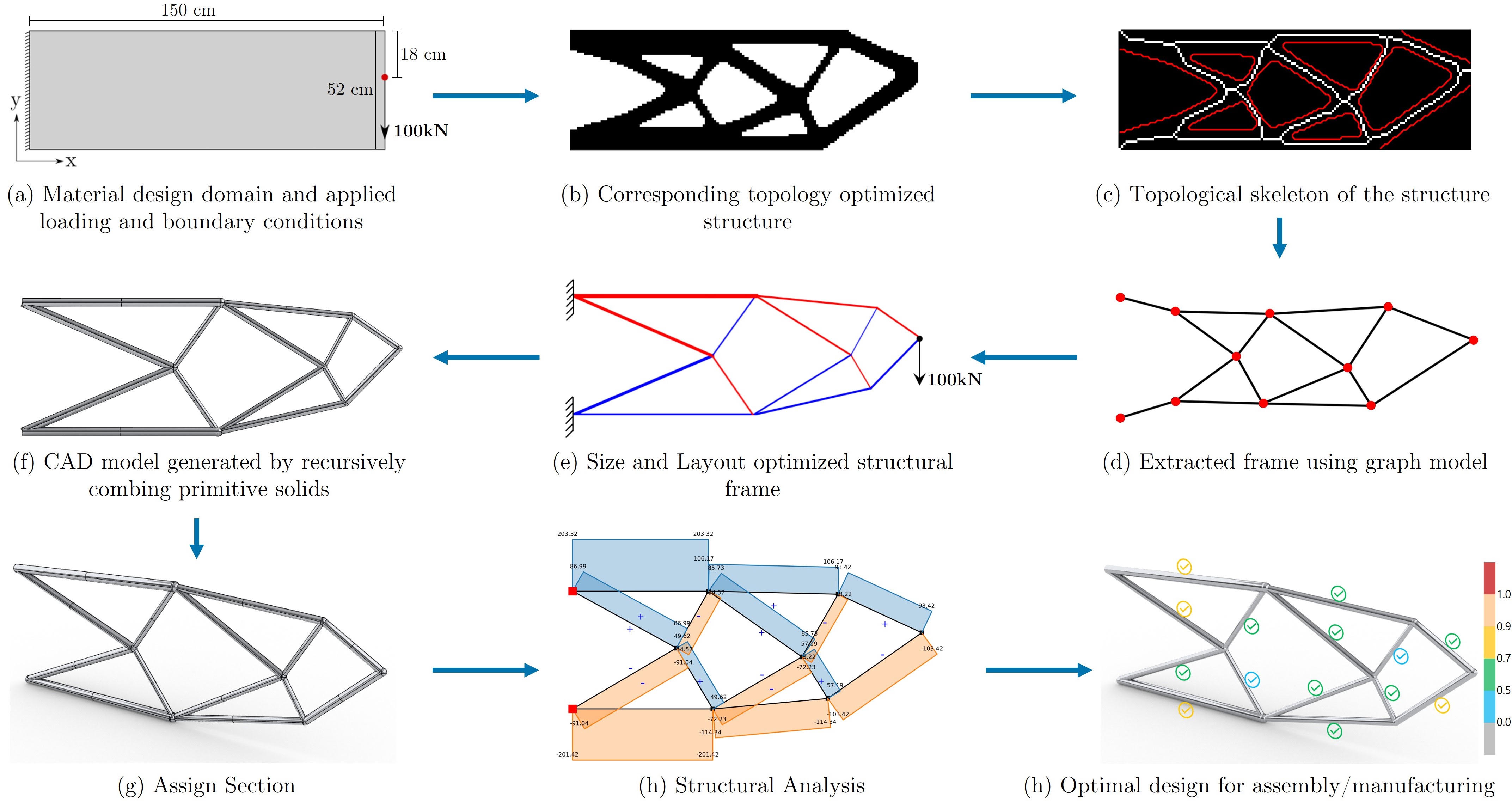
Fig. 1 — Complete workflow illustrated on a cantilevered beam example.
- SIMP topology optimization
- Modified Zhang–Suen skeletonization
- Graph-based frame extraction
- Sequential size & layout optimization
- Constructive Solid Geometry (CSG) CAD generation
- Eurocode 3 (EN 1993-1-1) code compliance
- Axial tension & compression checks
- Bending, shear, and buckling verification
- Additive and assembly manufacturing outputs
C. Fernando, S. Herath and L. Sivanantha Sarma, "Diffusion-based cGAN Framework for Automated Optimization and Code-Compliant Generative Design of Thin-Walled Structures," Thin-Walled Structures, Elsevier, 2026. [Link]
L.S. Sarma, C. Mallikarachchi and S. Herath, "Design-Informed Generative Modelling of Skeletal Structures using Structural Optimization," Computers and Structures, vol. 302, p. 107474, 2024. [Link]
L. Sivananthasarma and H.M.S.T. Herath, "Nothing is better than something – Perspective of Structural Optimization in Civil Engineering Applications," in Proc. Annual Sessions, Society of Structural Engineers Sri Lanka, Colombo, 2022, pp. 74–79.
S.K.L. Gunawardhana, L. Sivananthasarma and H.M.S.T. Herath, "Design Optimization of a Steel Bridge Bracket," in MERCon 2022 · 8th Int. Moratuwa Engineering Research Conference, Colombo, 2022. [Link]